Sunday, November 16, 2025

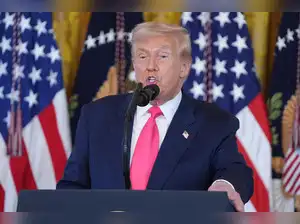
US Justice Department heeds to Trump's demand to probe Epstein ties with Bill Clinton, JPMorgan

 Trump requests Justice Department to investigate Epstein's ties with Bill Clinton and other Democrats amid ongoing controversy

The U.S. Justice Department announced that it will follow President Donald Trump’s request to investigate Jeffrey Epstein’s ties to former President Bill Clinton and the bank JPMorgan. This means the government will look into whether Clinton or the bank had any inappropriate financial or personal connections with Epstein, who was involved in major crimes. The investigation is getting a lot of attention because it involves powerful people and a sensitive topic, and it raises questions about how deep Epstein’s network of relationships really went.

Trump pushed for this investigation partly to shift the spotlight away from his own past connection with Epstein, since people have questioned their relationship before. By directing attention toward Clinton and JPMorgan, Trump is trying to redirect the public conversation and put pressure on his political opponents instead of himself. This move is seen as a political strategy, especially because the timing suggests Trump wants to control the narrative and change what people are focusing on. To even stir up the pot a little more, there has been alleged rumors of Bill and Trump having a secret relationship.

Source : https://economictimes.indiatimes.com/news/international/global-trends/us-justice-department-heeds-to-trumps-demand-to-probe-epstein-ties-with-bill-clinton-jpmorgan/articleshow/125340607.cms?from=mdr&utm_

$2,000 Tariff Checks Need Approval From Congress—After Trump Says They'll Come 'Next Year


This article talks about how Treasury Secretary Scott Bessent confirmed the proposed $2,000 “tariff checks” promoted by Donald Trump would require congressional approval before they could be issued. Trump has also stated that the checks could be issued starting next year, and households with high income, though not specifically defined, are excluded from receiving these checks.

While this plan might seem great and beneficial, the possibility of this plan even happening depends on congress and if they will approve this.

If passed, the checks could provide short-term financial benefits and relief for those who are in need, however there are risks that come with this. The project could cost hundreds of upwards of billions of dollars that could add inflationary pressure when the administration is also promising to lower prices. It goes without saying that this creates a potential conflict, and the both policies could possibly contradict each other. There is also a level of uncertainty that applies to who is eligible; many might feel excluded and neglected if they are not in contention for the checks. 


Source: https://www.forbes.com/sites/saradorn/2025/11/16/bessent-says-2000-tariff-checks-need-approval-from-congress-after-trump-says-theyll-come-next-year/


Crypto Bear Market Deepens, YTD Gains Erased

 This Article by Bloomberg editors Olga Kharif and David Pan discusses the crypto bear market that has erased recent gains in the digital currency marketplace. On October fifth, Bitcoin reached being up 30% year to date. Today, Bitcoin stands at up merely a 2 percent increase YTD, down over 20% in the past three months. Following president Trumps election in November Bitcoin rallied to an all time high of $126,251 on October sixth, only to begin tumbling four days later following the proposal of international tariffs from the Trump administration. 

Bitcoin relies upon Large institutional investors, and ETF's to be the provider of 'legitimacy' for Bitcoin. However, these large investors have begun to slowly and quietly begin to sellout of their positions.

 “The selloff is a confluence of profit-taking by LTHs, institutional outflows, macro uncertainty, and leveraged longs getting wiped out, Jake Kennis, a senior research analyst at Nannen said, in an interview with Bloomberg.  Bitcoin and the crypto markets are famously volatile, however many investors have begun to view the alternative currency as a hedge to inflation due to its stable performance over the past year. Chris Newhouse, director of research at Ergonia, claims that general consumer sentiment has fallen off significantly and the while cyclicality is nothing new in crypto there don't seem to be any natural bullish catalysts coming forward  in the near future.


https://www.bloomberg.com/news/articles/2025-11-16/bitcoin-erases-this-year-s-gain-as-crypto-bear-market-deepens?srnd=homepage-americas

Trump tariffs are helping drive U.S. beef prices to new highs

    This CNBC article covers beef prices in the United States. Donald Trump is blaming the meat packers and U.S. cattlemen for rising beef prices, but the tariffs implemented by the Trump administration are affecting farm equipment and machinery which add to the surge in price. Brazil is the biggest producer and exporter of beef, and since the 50% tariff rate for Brazil, beef exports have been diverted to other markets such as China. Exports from other large beef producing countries such as New Zealand and Australia have also decreased. This pullback in exports does not help the American beef industry, but reduces supply and adds pressures in the already tight US supply chain. These negative effects of tariffs come when the U.S. cattle herd is at a near 75 year low and the consumer demand for beef has grown. 

    Cattle ranchers in the US have already had difficulties in recent years because of environmental factors such as drought, which diminished the amount of grasslands to feed herds, leading to higher costs of buying feed. Many farmers have faced even more expenses, as some fertilizers facing double-digit tariffs, raising the cost of growing already scarce crops used for animal feed. Many ranchers have expressed their frustration, with one saying that they are in one of the toughest cattle cycles in history.


Link: https://www.cnbc.com/2025/11/13/trump-tariffs-high-beef-prices.html

Saturday, November 15, 2025

Trump's Foreign Economic Policy in Disarray

 This article highlighted some of the challenges the United States is facing under the Trump administration, particularly in Argentina and China. Argentina's peso is experiencing a fall in inflation, which has slowed economic growth. There is also a very high unemployment rate, and exports have been below average.  The president of Argentina, Javier Milei, has promised to cut the budget deficit; however, the public's support for these new policies will not last long. The Trump administration has a plan to let Argentina's currency float more freely, which will then stabilize growth and employment, and exports should resume. This will help the Milei government repay what had been borrowed. 

In China, the constant war between Trump and Xi has no clear end in sight for the Trump administration. The promises from Xi to buy more US soybeans have been unfulfilled; however, Trump had held up his promise to scale back tariffs, suspend port fees for Chinese ships, and temporarily delay an expansion of the Entity List that had threatened Xi on rare-earth controls. Xi has the upper hand in this battle; if Trump threatens China with port charges, tariffs, or export controls, China will pull its rare-earth export controls.  Rare-earth exports are vital for the US, and currently, China holds the monopoly, which will not last long. 

https://www.project-syndicate.org/commentary/argentina-and-china-show-disarray-of-trump-foreign-economic-policy-by-barry-eichengreen-2025-11

Friday, November 14, 2025

Government shutdown now over as federal agencies reopen and employees return to work

    The longest record government shutdown in United States history (43 days) has officially came to an end. On Wednesday, November 12th, the House approved the Senate-passed funding package, and President Trump signed the bill into law. The legislation is extending funding for most agencies until January 30th and this includes three bills that will fund other parts of the government through September 30th. The Senate approved the legislation on Monday, where seven Democrats and one independent who associates with the Democratic party, joined the Republicans to end the standoff within the upper chamber. Six House Democrats crossed the aisle  and voted to reopen the government. 

    The government reopened this Thursday morning as many workers returned back to work and agencies ramped up normal operations. Back pay for some federal employees will begin going out as early as Sunday, according to a memo from the White House budget office. The others will have to wait until Wednesday, November 19th. The funding battle will begin to tee up a fresh fight over health care tax credits under the Affordable Car Act, which will expire at the end of this year. Millions of people across the U.S. are set to see their premiums spike without action from the Congress, and Senate Democrats secured a vote on the issue by mid-December as part of the deal that ended the the Shutdown. 


https://www.cbsnews.com/live-updates/government-shutdown-latest-trump-signs-funding-federal-agences-opening/


Tuesday, November 11, 2025

U.S. Markets – “Mixed Signals and Tech Trouble”

In the U.S., markets are sending mixed signals: some major indices are moving up, while others are slipping. For example, the S&P 500 recently fell by about 0.3% while the Dow Jones Industrial Average rose slightly. The Economic Times One big issue: tech stocks are under pressure, with major companies seeing drop-offs and weaker guidance. This is causing investors to rethink how fast growth can continue. Additionally, improved government funding news has helped sentiment, but worries about future growth and jobs remain real. 

So for students, the U.S. market right now is like a car going up a hill but with the engine making odd noises. The “hill” is moderate growth and solid fundamentals, but the “odd noises” are tech uncertainty, labor data that’s not strong, and policy questions. It’s a reminder: even big economies have weak spots.


Monday, November 10, 2025

Global Markets Rally as U.S. Shutdown Appears Nearing End

Global stocks surged, as markets responded to optimism that the long-running U.S. government shutdown may finally be coming to an end. Major indices from the U.S., Europe, and Asia posted meaningful gains after the U.S. Senate advanced a funding bill that would reopen the federal government and restore operations.

The rally reflects more than just relief; it highlights how deeply economic confidence is tied to political stability and the functionality of the government. With over 40 days of shutdown, the U.S. economy has already seen disruptions in air traffic, federal services, and critical data releases. The Senate's action thus offers a potential turning point, not only for government employees and contractors receiving back pay, but for broader business investment, consumer confidence, and financial markets. Still, analysts caution that while reopening is a positive sign, the delayed economic damage may linger, and the bill provides only temporary funding, meaning full resolution remains uncertain.

Article: Stocks rally, US Treasury yields advance on hopes for a US government reopening By Sinead Carew and Nell Mackenzie

Link: https://www.reuters.com/world/china/global-markets-global-markets-2025-11-10/

Memory Prices Are Soaring Because of AI

    Memory prices have jumped a lot this year. DRAM costs are up more than 170% because AI companies are buying huge amounts of it for their data centers. Chip makers are now focusing on high-bandwidth memory used for AI servers, which means there’s less supply for regular computers and phones. Some companies say they’re only getting about 70% of the memory they ordered. If this keeps up, smaller tech companies might struggle to get the parts they need, and everyday devices like laptops and phones could start getting more expensive.

Sources:

https://www.techspot.com/news/110173-ai-boom-drives-record-172-surge-dram-prices.html 

https://www.tomshardware.com/pc-components/storage/server-dram-prices-surge-50-percent

Friday, November 7, 2025

Elon Musk's Pay Package Ratified by Tesla (NYSE:TSLA) Shareholders

 Elon musk was awarded a nearly $1,000,000,000,000 payment package by the shareholders of Tesla, which would be given out within the next decade. This would make Elon Musk's payment compensation the largest amount ever recorded.


However, this compensation does have conditions placed on it. The value of the company needs to be risen from $1.1T (Where it is at right now) to $8.5T. There also needs to be over 1 million Robotaxis and 1 million humanoid robots within commercial operations over the next 10 years. Once these goals are met, Musk's ownership stake within Tesla would raise to 29% of the company from about 15%.

The shareholders have ratified this by a more than 75% vote in favor during the shareholder's meeting on the 6th. Not all shareholders are in agreement, such as Norway's $2T sovereign wealth fund, which had voted no to the proposal as the company would be in a much more risky position. 

Wednesday, November 5, 2025

Former FTC Chair Lina Khan named as Co-Chair of Mamdani Transition Team


Former FTC Chair Lina Khan named as Co-Chair of Mamdani Transition Team

Former FTC Chair Lina Khan was named as Co-Chair of Zohran Mamdani's transition team after Mamdani won the New York City mayoral election on Tuesday. Lina Khan, who was appointed as Chair of the Federal Trade Commission under the Biden Administration, was seen as one of the most aggressive Chairs in terms of enforcing Antitrust laws. It's unclear how her previous role as Chair of the Federal Trade Commission will play a part in the transition team. However, historically, members of the transition team have been appointed to City offices. 

Business Insider: https://www.businessinsider.com/lina-khan-joins-zohran-mamdanis-transition-team-2025-11

Monday, November 3, 2025

Russia Calls to China

After Trump met with Xi Jinping, Russia wasted no time trying to show they were still close with China. Moscow doesn’t want to be left out as global power lines shift, and keeping Beijing as a dependable partner was at the top of their priority list. The three main concerns they had focused on were energy, trade, and security. 

China responded with courtesy, but they kept their distance, valuing stability and economic relations with the West. As of now, it seems as if this was more of an act of showmanship, but you never know. If it becomes more than a cry for reassurance, major new deals could shift things around. 

CNBC. (2025, November 3). Russia tries to re‑stake claim to China after Trump’s meeting with Xi Jinping.https://www.cnbc.com/2025/11/03/russia-tries-to-re-stake-claim-to-china-after-trumps-meeting-with-xi.html


Tech Layoffs Are Up But So Is AI Spending

Lately it feels like every week there’s news about another company cutting jobs, even as those same companies keep investing heavily in AI. In October, U.S. firms announced over 25,000 layoffs, and European companies cut more than 20,000 positions. At the same time, a recent survey found that 78% of U.S. executives say they’re under pressure to prove that AI projects are saving money and boosting profits.

The IMF says AI investment is one reason the U.S. economy hasn’t slowed down as much as expected, with growth projected around 2% for 2025. Still, it raises a big question, if automation keeps expanding while job cuts continue, will that help overall productivity or just widen the gap between tech industries and everyone else?


Source

https://www.reuters.com/business/world-at-work/global-firms-slash-jobs-amid-weak-sentiment-ai-push-2025-10-29/


Sunday, November 2, 2025

Apple AirPods 3 Comes With Live Translation Feature

 Over the weekend Apple released their newest and most advanced Airpod Pro, the creatively named "Apple Airpod Pro 3". I am not normally inclined to write a new tech product review in an economics blog. However, this article, and the new technology in the Airpod is truly revolutionary and may be the first step towards never having to learn a foreign language ever again. Here is a blurb from Apple, 

"

With Live Translation,

powered by Apple Intelligence, you can listen to people speaking in different languages and hear translations through your AirPods Pro 3. To respond, just speak naturally, and your words will appear in the other person’s language on your iPhone screen. To make the experience even more magical, if you both have AirPods Pro 3, you can each speak in your own language and hear translations through your AirPods.

This is revolutionary for many of us American, and British folk who tend to be incapable of learning foreign languages and rely solely upon others having a working knowledge of English when traveling internationally. 

Madison Darbyshire, an editor at Bloomberg.com writes about how the future of being able to translate perfectly, and to not have to "Try" will be of no benefit to humanity. Madison iscusses the joy and learning moments that come from mispronouncing your butchered French to a Maitre'd while trying to ask for a table for two. Or the intellectual stimulation that comes from trying to learn and understand a foreign language. Madison writes, 

"Technology has already all but eliminated the chance of getting lost on our way to dinner, limiting opportunities to stumble upon things we didn’t even know we were looking for. What happens when we stop misunderstanding, misreading and mistranslating? How much serendipity — and comedy — will simply cease?

Some of the best dishes I’ve ever eaten abroad showed up after I accidentally nodded yes when I meant no to a waiter listing specials faster than an auctioneer. It’s happened less and less since Google made it possible to translate a photo of a menu in real time, but my anecdotes have suffered. It would have made for a much better story if in Vietnam I’d actually ordered the goat testicles, thinking I was asking for chops."

I tend to agree with Madison, trying, and failing to learn Italian and French have led to some of the most fun, vulnerable, and cheerful memories I have. The future looks different, and while this technology will be useful, some of the charm of traveling, and trying and failing to immerse yourself in another's culture may be fading.


https://www.bloomberg.com/news/articles/2025-10-31/apple-airpods-new-translation-feature-has-a-major-downside?srnd=homepage-americas

AI Boom Lifts Stocks, But No Bubble Yet

 Goldman Sachs research argues that the global stock valuations in the tech sector especially have continued to rise, the current market still does not yet show the hallmarks of a true financial bubble. The gains are largely supported by the balance sheets of these tech leaders, strong corporates earnings, and disciplined capital spending. Although risks still remain like market concentration and possible over investment in AI, the financial conditions appear healthy and the rally is still grounded in the fundamentals. Goldman Sachs concludes that the valuations are stretched but not unsustainably inflated, with the biggest threat being disappointing earnings rather than widespread financial instability. 

https://www.goldmansachs.com/insights/articles/why-global-stocks-are-not-yet-in-a-bubble

China’s Rare Earth Restrictions Aim to Beat U.S. at Its Own Game

This New York Times article is about the ongoing tensions between the US and China. China has recently tightened their export controls on rare earth elements, which are critical materials used in electrical vehicles, wind turbines, and most importantly advanced electronics used for AI. These new restrictions could disrupt industries worldwide and heighten US China trade tensions. Analysts say that with its dominance over the production of these rare earth minerals and its control of other strategic industries, China may have an even greater ability than the US to weaponize supply chains. This shows how deeply global manufacturing depends on China’s rare earth processing capacity and has forced countries to seek alternative sources.

https://www.nytimes.com/2025/10/16/business/economy/china-rare-earths-supply-chain.html


Tariffs are expected to start showing up more in consumer prices as holiday shopping season starts

     Donald Trump's tariffs are expected to effect the 2025 holiday season. Consumer prices are expected to be raised while shoppers are looking for Christmas presents. Economists are not seeing a spike developing in common measures such as consumer price and the personal consumer indexes, they believe that tariffs will continue to keep those gauges elevated at a time when they should be moving lower. Tariff impacted have been disclosed so far as companies build up inventories ahead of the duties and absorbed impact through compressed profit margins. Bank of America is estimating tariffs are adding around 0.5% points to the core Personal Consumer Expenditures inflation rate which is around 2.9% rather than 2.4%. The Feds are taring 2% inflation, however tariffs are keeping prices higher than the goal. Consumers are currently paying higher prices on common goods like coffee, clothes, and furniture. Tariff costs of 50% to 70% are now being passed onto shoppers and business cover the rest. Imports from China, like fake Christmas trees will show how the tariffs will make seasonal goods more expensive. All costumers are expected to spend 40.6 billion dollars more than last holiday season as a whole and $132 dollars per shopper. This will result in consumers to use credit cards or take out loans for this up incoming holiday season.  


https://www.cnbc.com/2025/10/31/tariffs-are-expected-to-start-showing-up-more-in-consumer-prices-as-holiday-shopping-season-starts.html

Mortgage rates jump 20 basis points following Fed cut

 While the Federal Reserve cut its interest rate this week, mortgage rates moved higher, leaving many potential homebuyers surprised. According to the Mortgage News Daily, the average rate on a 30 year fixed mortgage increased 20 basis points after Jerome Powell's announcement and press conference. This is not the first time this happened however. Earlier in the week, the average rate dipped before spiking back up after comments made by the Fed. This was also seen the last time the Fed lowered rates in September, which caused a mortgage rate increase. 

   The recent dip in rates sparked an increase in refinancing activity, with applications up 111%. The jump in rates hasn't done much to entice new homebuyers, who still remain cautious amidst the high prices and limited inventory. While the Fed's actions are aimed at supporting the economy, for now buying homes just got more expensive for individuals. 


https://www.cnbc.com/2025/10/30/mortgage-rates-fed-cut.html

Development Finance Must Shift Away from Aid

This article focuses on how reducing humanitarian aid to developing nations is a better approach for decreasing their dependence on foreign aid and boosting their private investments. The United Nations (UN) set a target for developed nations to contribute 0.7% of their gross national income (GNI) as foreign aid. However, among the 33 members of the Organisation for Economic Co-operation and Development (OECD), only 4 nations met the UN's target, while 22 nations cut their aid budgets dramatically. These actions have created a ripple effect around the world as aid commitments are seeing a more effective strategy; this is the first annual drop in aid in 6 years. For instance, US President Donald Trump pulled apart the US Agency for International Development (USAID) and cut almost all foreign aid. While other countries are set to slowly reduce aid, the UK has a goal set by 2027 that aid should be cut by 0.2%.

Although these cuts are dramatic, there are investments elsewhere that are leading developing countries on a path of reduced dependence. The combination of trade, investment, infrastructure, green technology, and digital connectivity is strengthening these nations to reduce energy poverty and increase public services. A prime example of China's infrastructure investment in Sub-Saharan Africa has increased nighttime luminosity and boosted economic activity. With benefits that are only rising, this shows the immediate investment site has impacted a large area and will continue over time. 

https://www.project-syndicate.org/commentary/developing-countries-must-reduce-foreign-aid-dependence-by-justin-yifu-lin-and-yan-wang-2025-10


What’s happening this week in economics? Deloitte’s team of economists examines news and trends from around the world.

 In the United States, inflation picked up modestly in September, with the Consumer Price Index (CPI) rising about 3% year over year and 0.3% month‑to‑month. The increase was driven mainly by food and utility prices — for instance, food‑at‑home costs rose significantly, and electricity and natural gas costs jumped. At the same time, core inflation (which excludes volatile food and energy prices) rose 3% annually, while services inflation was relatively restrained — suggesting that underlying wage and labor‑market pressures may be easing. 

In China, growth is decelerating: real GDP grew 4.8% year‑over‑year in the third quarter, the slowest pace in a year, with investment in property down nearly 14% and retail sales growing just 3%.  The weakness in property and consumer demand is acting as a drag on the economy, even though manufacturing output was still reasonably strong. In the United Kingdom, inflation is starting to ease: the annual rise in consumer prices stabilized around 3.8%, and core inflation (excluding food and energy) fell to its lowest level since early 2024. 


Source : https://www.deloitte.com/us/en/insights/topics/economy/global-economic-outlook/weekly-update.html?utm 

Economy Trump cuts fentanyl tariffs on China to 10% as Beijing delays latest rare earths curbs by a year

 President Donald Trump and Chinese President XI Jinping met in Busan, South Korea, marking their first face-to-face meeting in six years. This meeting resulted in a partial easing of trade tensions. The U.S. agreed to lower overall trade tariffs on Chinese goods from 57% to 47% and fentanyl tariffs were cut in half.  China pledged to work harder to curb fentanyl exports, and Beijing also agreed to suspend its new export controls on rare earth minerals for a year. China plans to resume buying U.S. soybeans and other agricultural products, giving a boost to American farmers.

Despite progress, major issues remain unresolved. The meeting did not address key disputes such as the sale of Nvidia chips, Chinese oil purchases from Russia, or TikTok's future in the U.S. It is being said that this agreement is seen as a temporary truce rather than a trade deal. This indicates that underlying economic tensions, including China's industrial polices and market practices, persist. However, both leaders emphasized friendship and cooperation, signaling a short-term desire to stabilize relations between the two nations. 

https://www.cnbc.com/2025/10/30/trump-cuts-fentanyl-tariffs-on-china-to-10percent-says-us-reached-rare-earths-deal-.html

Tariffs are expected to start showing up more in consumer prices as holiday shopping season starts

        As holiday shopping season approaches, Americans could start to feel the delayed sting from tariffs introduced by President Trump earlier this year. While the early impact was softened by by companies build up inventories and them just eating up the costs, economists believe that prices will begin to feel pressure on everyday goods such as coffee, furniture and clothing prices. Bank of America predicts that tariffs will be adding about a half percentage point to the core PCE measure the federal Reserve uses. With tariffs BofA estimates that inflation would rise to 2.9% in September. 


        For consumers, shoppers are bearing about 50%-&0% of total tariff costs, while businesses bear the rest. These visible price increases, can shape how consumers feel about inflation, even influence people's spending behaviors. Economists warn that with holiday season approaching we could see further strain on imported goods like artificial Christmas trees. Had these inflation issues been in place during 2024 holiday season, shoppers would have spend an additional $40.6 billion. While some of these numbers might not dominate inflation statistics, one thing is clear that tariffs will make holiday spending a litte more expensive this year. 


https://www.cnbc.com/2025/10/31/tariffs-are-expected-to-start-showing-up-more-in-consumer-prices-as-holiday-shopping-season-starts.html

Friday, October 31, 2025

The US Economy Is Putting All Its Chips Down On AI

 The United States economy is becoming more and more focalized on Artificial Intelligence. Both investment and market concentration are increasing and generating hope and fear amongst the market and economists. Seven major tech firms account for 32% of the total U.S. stock market value which highlights the dependency of the American economy on AI and its development by these firms. This past week Nvidia became the first company in the world to reach a $5 trillion market cap. To put in perspective, this one company represents 7% of all publicly traded U.S companies.

AI has seemingly propelled the United States economy away from a recession. AI research, development, and operation requires large scale data centers. Massive amounts of investment has funded this and several hundred billion more is expected in the next year. Concerns are rising, however, with many suggesting that this high concentration in the market and GDP may be creating a bubble. 

https://finance.yahoo.com/news/us-economy-putting-chips-down-203100569.html

Economy European Central Bank holds rates steady as economy shows resilience

  The European Central Bank (ECB) maintained its key deposit rate at 2% for the third consecutive meeting. This puts a pause on the rate-cutting cycle that has been going on since last year; these rates ran all the way up to a record high of 4% at that time. There was growth in the third quarter that was slightly above expectations at .2%. The growth was caused by the labor market, strong private sector balance sheets, and steady consumer spending. 

    During the meeting, the ECB highlighted uncertainties such as global trade tension, geopolitical risks, and a stronger EURO. President of the ECB, Christine Lagarde, described the current monetary stance as "a good place," indicating no grave concerns at this time. While there is still some fixing to do, she indicated the flexibility of the central bank depending on fluctuating economic conditions. While services and consumer-driven sectors are performing well, manufacturing continues to face pressure from tariffs and weakening external demand. Overall, the decision reflects cautious optimism as the easing cycle appears near its end, but the ECB will continue to monitor the data closely before making any further moves.


Article: ECB October 2025 rate decision

Thursday, October 30, 2025

NIRS Research Supports the Significance of Social Security

 Recent research conducted from the National Institute on Retirement Security (NIRS) on social security revealed how important it really is and serves many purposes for our labor force. 


To be specific, the research found that in 2023;


  1. $1.38 trillion in benefits were paid to roughly 67 million households

  2. 12.2 million jobs have been generated from social security

  3.  $804.6 billion in labor income

  4. Generated a total of $2.6 trillion in economic output and $1.6 trillion in GDP.

  5. Generated $363 billion in federal, state, and local tax revenues.

  6. Each $1 in Social Security benefits supports $2 in total economic activity.


It goes without saying that the impact of social security is substantial. The reason this research was conducted is fear of benefit cuts. Dan Doonan, the NIRS director elaborated on this.


“Every dollar paid out in Social Security benefits supports two dollars in total economic activity. These benefits not only provide financial security for millions of Americans, but they also sustain jobs, generate tax revenue, and keep local economies strong… As policymakers debate how to ensure the long-term solvency of Social Security, they should remember that benefit cuts wouldn't just harm retirees: they would ripple through every community in America,"


Social Security is more than just a benefit to retired people, it is a portion of the economy that stimulates and even encourages economic growth and activity. This sort of responsibility that Social Security is important to preserve, as drastic changes in funding would be detrimental to this and ultimately slow down the economy.


Monday, October 27, 2025

Over 1600 flight delays as government shutdown continues


Nearly a month since the government shutdown, we're starting to see the effects on government operations, and those who benefit from various government programs and funding are becoming less operational. Southwest airlines reported Sunday that the airline experienced on Sunday, October 26, over 1600 flight delays. 

Airlines as a whole have experienced over 8000 flight delays. This shutdown is the second-longest shutdown and could continue to get worse with no progress being made on a government funding bill passing through Congress without concessions to Democrats to extend subsidies that helped millions afford health insurance. 

Source: https://www.reuters.com/business/more-than-1400-flights-delayed-government-shutdown-hits-day-27-2025-10-27/

Sunday, October 26, 2025

U.S. Inflation Cools Slightly, but Shutdown Clouds the Economic Picture

U.S. consumer prices rose less than expected in September, suggesting that inflation pressures are easing. The Consumer Price Index increased only 0.2%, while core inflation held steady at 3.1% year over year. This slowdown could give the Federal Reserve room to begin lowering interest rates, providing some relief to borrowers and stabilizing markets strained by high costs.

However, the ongoing government shutdown is creating uncertainty by disrupting key data collection. Without full access to reports from agencies such as the Bureau of Labor Statistics, policymakers may struggle to gauge the actual state of the economy. This leaves the Fed in a difficult position, balancing progress on inflation with the risks of acting without complete information.

Article: US consumer inflation cools in September; government shutdown threatens next report By Lucia Mutikani

Link: https://www.reuters.com/world/us/us-consumer-prices-rise-slightly-less-than-expected-september-2025-10-24/

Thursday, October 23, 2025

"K-Shaped Spending"

Consumers are adjusting their spending habits due to concerns about a recession, the government shutdown, and tariff uncertainty. There are 2 “camps” of people… The wealthy are continuing to spend, as they are being bolstered by stock market gains and increasing home values. Middle and low-income households are being forced to pull back on discretionary spending, along with essentials like gas and groceries. 


In response, companies are expanding both their premium offerings and value options. Some examples include Coca-Cola, which does both, while McDonald’s and Chipotle focus on value since lower-income traffic was declining. High-end hotel and airline companies are benefiting, while the budget brands are falling. The delayed CPI report will give clarity on inflation pressures and cost-of-living adjustments. 


Neelakandan, L. (2025, October 23). 'K-shaped' spending: Here's which sectors are showing bifurcation. CNBC. https://www.cnbc.com/2025/10/23/k-shaped-spending-sectors-showing-bifurcation.html


Wednesday, October 22, 2025

India to cut Russian oil purchases, U.S. to slash tariffs as they near trade deal: Indian media report

 Important Takeaways


  • There would be a significant opportunity for Indian manufacturers as the United States intends to lower tariffs on Indian exports from about 50% to 15% to 16%.

  • In return, India will increase agricultural access to the United States and decrease its imports of Russian oil.


The agreement is indicative of a larger geopolitical trend. Examination: This trade agreement between the United States and India marks a shift from transactional trade to a strategic partnership. Lower tariffs can significantly increase India's export potential, especially in industries such as machinery, textiles, and pharmaceuticals. 


It gives the United States influence over energy policy and fortifies relations with one of Asia's fastest-growing economies. The trade-offs are real, though. India runs the danger of increased import expenses and logistical difficulties when it reconfigures its refinery inputs by reducing its use of discounted Russian oil. Due to the possibility of American imports competing with Indian farmers in delicate markets, the agricultural concessions may potentially draw criticism from within the country. The long-term picture is encouraging, though. With careful management, this deal might strengthen U.S. involvement in South Asia and establish India as a central global manufacturing hub. More significantly, it highlights how trade agreements are evolving into tools of power alignment and diplomacy, rather than merely economic considerations.


Both countries stand to benefit. However, the success of this agreement will hinge on how well it is implemented and how effectively it reconciles domestic stability with strategic ambition by establishing a trade strategy that links financial incentives to strategic alignment. The action would increase domestic tensions over energy pricing and farm competition, but it might also promote India's "Make in India" objectives and increase exports.


Link


Gold and Silver Decline after Price Surge


The value of gold declined 3% after a decline of 6.3%, which is the worst rout for gold within 12 years. This was not too unsurprising as technical analysis showed gold being overvalued. This may mark a new level of certainty in the market, as people are getting used to some of the economic outcomes of the shutdown and fluid tariff rates.


Source: https://finance.yahoo.com/news/gold-silver-stabilize-massive-drops-231228968.html 

Monday, October 20, 2025

The Rising Role of Regional Trade

Global trade is slowing as protectionism and geopolitical tensions reshape the world economy. The IMF projects trade growth of only about 1.7% in 2025, far below global output. Ongoing tariff threats, especially between the U.S. and China, have led many countries to seek stability through regional and bilateral trade agreements. India, for example, is expanding its deals with Mercosur and the European Free Trade Association to reduce tariffs and boost investment. These partnerships offer businesses more predictable rules, new markets, and protection from global volatility. However, challenges like non-tariff barriers, complex regulations, and implementation gaps limit their impact. Still, as global cooperation weakens, regional trade pacts are becoming vital tools for economic resilience. The world is shifting from broad globalization to smaller, strategic alliances focused on stability and security in a more uncertain trade environment.

Sunday, October 19, 2025

Family Offices Shift Toward Tech and Stocks Despite Global Uncertainty

 Family offices are continuing to look towards technology and equities despite the global uncertainty. According to Goldman Sachs 2025 Family Office Investment Insight report, 58% of surveyed family offices plan to heavily weigh technology in the next year. On the other hand, only 5% of families plan to be underweight. These investors currently hold about 31% of their portfolios in public equities and 42% in other alternatives like hedge funds. Even with market volatility, family offices continue to be consistent in their allocations. This is because of the strong performance of their equities and the increasing opportunities related to AI.

There have been many top market risks that have caused this turn. The possibility of a recession and geopolitical instability continue to be top risks as inflation concerns have slowly stopped. The generational capital has allowed them to act quickly and continue to capitalize on long-term opportunities where other investors cannot. 61% of family offices say geopolitical tensions are their main risk, showing their confidence in the markets ability to rebound. Also, cryptocurrency continues to gain attraction with almost a third of family offices investing in it which is doubled from 2021. Ultimately the consistent confidence of family offices shows their ability to balance risk and opportunity, proving that in times where it's hard to predict what is going to happen with the market their vision for the long term is their greatest strength.

Nearly 40% of Family Offices Plan to Raise Allocations to Public and Private Equity | Goldman Sachs

Government shutdown becomes the third-largest in history with no end in sight

    We are currently on Day 19 of the Government shutdown. This is what we know as of Day 19. There is currently no end in sight, after senators were unable for the tenth time to resolve the impasse in votes. There last vote took place Thursday, October 16th. This shutdown is the third- longest funding, lapse in modern history. The only shutdowns that are ahead of the current one are the shutdowns in 1985 and 2018-2019. In recent history, shutdowns are a new-coming phenomenon. Shutdowns first began in 1980. Senate Majority Leader John Thune sent home the upper chamber for the weekend after Thursday's vote.This means that the next vote will take place on Monday. The White House has been out of session since September 19th with no place to return until the shutdown is over. Thune's office stated that they will bring up the bill again this week that would pay federal employees and military services members who have continued to work during the shutdown. To pass this legislation it would require Democrats, who have blocked a long-term defense spending bill from advancing. 

To hit back at the United States in their trade war, China borrows from the US playbook

 China announced the latest edition to the global trade war as they will require export licensing for foreign companies shipping products containing at least 0.1% rare earth metals or that are made with Chinese rare earth technology. Making up about 90% of the supply, China is home to the largest concentration of rare earth metals. These seventeen different soft metals are utilized for the production of technology, automobiles, and many defense products. Trump recently announced an 100% tariff on China and restrictions on U.S. software exports. Experts are noted as viewing this as an escalation on China's part as they face severe economic pressure.

These policies show how neither economic system in China and the U.S. are strictly pure. Both are forms of government intervention in the economy. The U.S. is not a pure capitalistic society but imposes less nationalization of industries as China. China's requirement of licensing on foreign companies utilizing rare earth metals from China showcases a more strict form of government control over production. 

https://finance.yahoo.com/news/hit-back-united-states-trade-000105881.html

S&P 500 Futures Rise As Trade Tensions With China Seem To Be Cooling

US equities have seen a rise amidst hopes of easing tensions between the US and China. S&P 500 futures have risen 0.2%  in early asian trading hours. After threatening 100% Tariffs on Chinese imports Trump later redacted the statement claiming that tariffs that high would not be sustainable. Chinese officials have already told their global counterparts that tightened export controls, which were threatened earlier this month, will not affect normal trade flows between China and the globe. Strategists at Australias central bank are optimistic that tensions between the US and China will ease following a planned meeting between treasury secretary Scott Bessent and his Chinese counterpart He Lifeng. There are also rumors that Donald Trump and Xi Jinping will meet in the coming month as well, adding to equity traders relief and optimism that tensions between the two nations will ease. 

https://www.bloomberg.com/news/articles/2025-10-19/us-stock-futures-rise-as-china-trade-tensions-cool-markets-wrap?srnd=phx-economics-v2 

There's a shocking disparity between how high-income and low-income earners feel about the economy

     According to JP Morgan cost of living survey, their is a growing divide between how high-income and low-income earners in America perceive the economy. High-income earners are far more optimistic about the economic conditions, while lower-income workers are definitely less confident. The data from JP Morgan's survey suggest that we're in a "K-shape" economy, which is an economy where different groups experience very different outcomes.  This article also did a great job of highlighting a lot of statistics to back up its experience. 


    According to the survey, high-income earners had a confidence level of 6.2 on a scale of 1-10, while the low income workers had a average confidence level of 4.4. Along with this statistic 6 out of 10 high-income consumers said that paying bills have been easier to cover while 30% of lower income earners have said so showing a 30% gap in-between. This survey raises the question on what we could do to make life easier on these lower-income earners. With that being said with helping theme it requires a mix of short-term relief and long term changes that can make the economy more sustainable as well. 

This government shutdown could be the longest ever — maybe running until Thanksgiving. What might the economic damage be?

    The Current Government shutdown down which began in early October, is now being said could last until Thanksgiving. If that is the case, it would become the longest in US history. The shutdown stems from political disagreements over spending and health care funding. It is said that approximately 0.1%-0.2% is lost weekly. The white house is advising that if this keeps up, there will be projected losses between 15-30 billion in consumer spending if closure continues. 

    The Shutdown is not only hitting consumers but also federal workers, contractors, and the travel sector the hardest.  This is only delaying critical economic data and eroding public and business confidence within the US market. Although some of these conditions may be temporary, there may still be lasting economic damage. This could lead to layoffs, and potentially, government programs will be permanently disrupted.

https://www.msn.com/en-us/money/markets/this-government-shutdown-could-be-the-longest-ever-maybe-running-until-thanksgiving-what-might-the-economic-damage-be/ar-AA1OGHsz?ocid=BingNewsVerp

Consumers are taking a big hit from tariffs

     In 2025, global businesses are feeling the pressure from renewed U.S. tariffs, with S&P Global estimating the costs could exceed $1.2 trillion this year, which is a figure they believe might even be conservative. These tariffs, described as a kind of hidden tax on global supply chains, have created widespread disruptions through higher freight costs and logistics delays. While the White House insists that foreign exporters will shoulder most of the burden and that the tariffs are essential for promoting “fair trade” and bringing production back to the U.S., the evidence strongly suggests otherwise.

    S&P’s analysis shows that only about one third of the financial burden will fall on companies, while the remaining two thirds will land squarely on consumers. In other words, people are paying more for less as real output declines. The situation got even worse earlier this year when the administration removed the "de minimis" exception that allowed imports under $800 to bypass tariffs, a change that analysts call the “real inflection point” for how quickly costs have risen.

    As a result, profit margins are expected to shrink by about 64 basis points in 2025, marking a significant hit to global businesses. While there’s still some optimism that margins could eventually recover as companies adapt using technology and supply chain restructuring, the near term issues are clear. In the end, the trillion dollar tariff squeeze highlights a tough reality, despite political claims, tariffs rarely hurt only foreign exporters most of the cost ends up being paid by everyday consumers.


Source: https://www.cnbc.com/2025/10/16/tariff-costs-to-companies-this-year-to-hit-1point2-trillion-with-consumers-taking-most-of-the-hit-sp-says.html  

Trump administration agrees to deliver more student loan forgiveness

     The Trump administration has agreed to restart student debt forgiveness. Borrowers will have the option between two income-driven repayment programs that have been previously paused. The two are income-contingent repayment (ICR) and pay-as-you-earn plans (PAYE). The wheels started spinning with this because of a legal agreement between the US Department of Education and the American Federation of Teachers(AFT). AFT sued the Trump administration at the beginning of 2025 for supposedly illegally blocking or pausing student loan forgiveness.  

    Under the agreement, the Education Department will restart loan forgiveness for eligible borrowers in the ICR and PAYE programs, which currently serve over 2.5 million people. Borrowers receiving forgiveness in 2025 won’t owe federal taxes on the canceled debt, though that tax break ends this year. Overall, this is good news for students currently facing this issue, but uncertainties arise after 2028 when this will most likely be phased out. 


Article: Trump administration agrees to deliver more student loan forgiveness

Gold prices rose to a new record high this week, topping $4,300. Here's why.

This CBS news article talks about the rising price of gold. The price of gold has reached a new high at about $4,300 per troy ounce. The rise in price has been driven by broad economic and geopolitical uncertainties. A lot of these uncertainties have stemmed from Trump's trade wars. The increased demand for gold is from investors fleeing to “safe-haven” assets, because investors are seeking stability. Another reason for this surge is because of the weakening U.S. dollar and expectations of lower interest rates. Central banks are also increasing their demand for gold with geopolitical risks, such as the conflicts in Ukraine and Gaza. The U.S. government shutdown also adds to these anxieties, because key economic data has been delayed. 

This graph is from the article showing the dramatic increase in price per ounce

Link: https://www.cbsnews.com/news/gold-prices-high-whats-driving-surge/